Sustainability
At Aliplast, sustainability is not a secondary concern but a strategic pillar. We produce aluminium solutions that meet international standards and contribute to a circular economy. For your projects, this means: reliable profiles, a reduced ecological footprint, and support for certifications such as BREEAM.
Our Vision
We follow the ISO 14001 and ISO 50001 standards, which ensure that we monitor all environmental impacts and actively reduce our energy consumption. In addition, our extrusion plants use aluminium billets with a lower CO₂ footprint than the European average (6.8 kg CO₂/kg), thanks to the use of renewable energy and recycled raw materials.
Why aluminium?
- 100% recyclable and endlessly reusable without loss of quality
- Long lifespan of 40–50 years
- Remelting requires only 5% of the original energy
Our profiles are produced with respect for people and the environment. Process scrap is remelted into new billets, significantly reducing our CO₂ emissions.
Our sustainable achievements
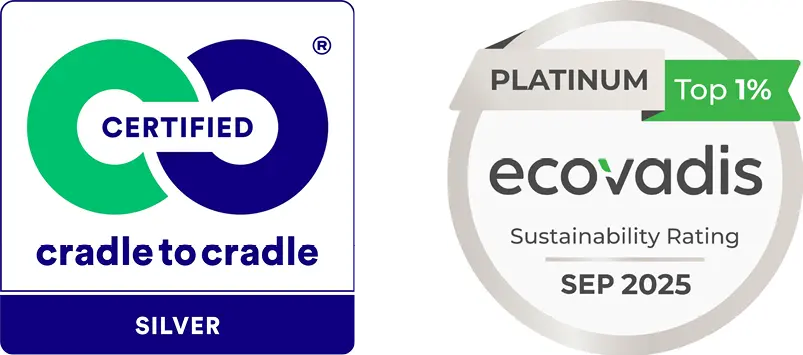
- Cradle to Cradle Certified for several systems
- 100% green electricity, partly generated by 5,400 solar panels (±1,600,000 kWh per year)
- Electrification: 89% of internal transport is electric, with the first electric truck arriving in 2026
- Annual savings of 664 tons of CO₂ thanks to our own solar energy
- Water consumption in coating lines reduced by 64%
- Energy efficiency: new ovens together save more than 400,000 kWh per year
Sustainable packaging
We avoid disposable materials by using reusable metal containers for deliveries. We also use protective materials such as Ocean Green foam profiles, made from 100% recycled and fully recyclable material. In this way, we reduce waste streams and support your sustainability objectives.
International recognition
Aliplast is part of the Corialis Group, which achieved an EcoVadis Platinum certificate in 2025 with a score of 84/100, ranking in the top 1% worldwide. Sustainability performance is evaluated across four key areas: environment, labour and human rights, ethics, and sustainable procurement.
Our CO₂ reduction targets have also been validated by the Science Based Targets initiative (SBTi), aligned with the 1.5°C climate ambition.